P.A.R.A. — A System for Organising Everything
P.A.R.A. is a universal organisation system developed by Tiago Forte. It stands for Projects · Areas · Resources · Archives — four top-level categories that cover every piece of information you might encounter in your work and life.
The core idea is simple: instead of organising information by topic or tool, you organise it by how actionable it is. This makes it easy to find what you need when you need it and to focus on what actually matters right now.
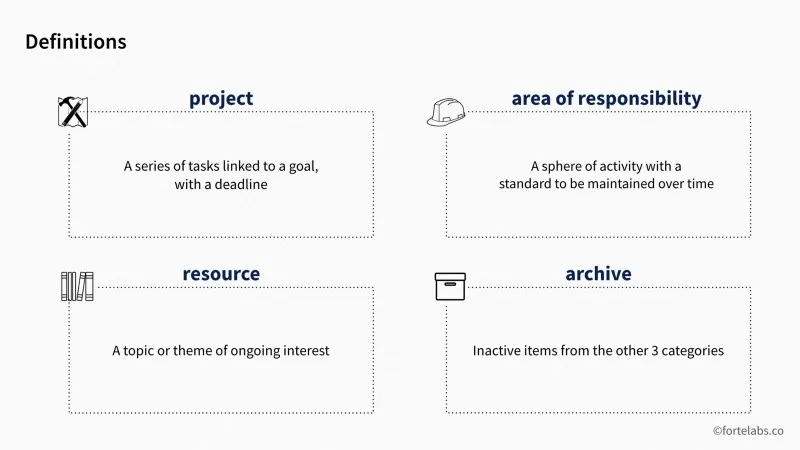
The four categories
📁 Projects
A Project is a series of tasks linked to a goal, with a deadline.
- Has a clear outcome you are working towards
- Has a defined end date or milestone
- Examples: “Launch new feature”, “Write Q1 report”, “Plan team offsite”
Rule of thumb: If it has a next action and a finish line, it’s a project.
🗂 Areas
An Area is a sphere of activity with a standard to maintain over time — no end date.
- Ongoing responsibilities that you continuously manage
- No single deliverable, but a standard you want to uphold
- Examples: “Health”, “Finances”, “Engineering practices”, “Team management”
Rule of thumb: If it never “finishes” but always needs attention, it’s an area.
📚 Resources
A Resource is a topic or theme of ongoing interest that may be useful in the future.
- Reference material you collect because it might be relevant later
- Not tied to any active project or area, but worth keeping
- Examples: “Useful articles about Kafka”, “Design patterns”, “Recipes”
Rule of thumb: If you don’t need it now but might someday, it’s a resource.
🗃 Archives
The Archive holds anything from the other three categories that is no longer active.
- Completed projects, dropped areas, outdated resources
- Kept for reference or historical context — out of your active workspace
- Examples: Finished projects, old job responsibilities, deprecated docs
Rule of thumb: If it’s inactive but you don’t want to delete it, archive it.
Why it works
| Category | Actionability | Time horizon |
|---|---|---|
| Projects | High — active work | Short-term |
| Areas | Medium — ongoing standard | Indefinite |
| Resources | Low — potential future use | Indefinite |
| Archives | None — inactive | Past |
By keeping these four buckets clean and distinct, you always know where to look and where to put new information — reducing mental overhead and keeping your focus where it belongs.